Study: "Money-Maker" Private Banking Rating 2026
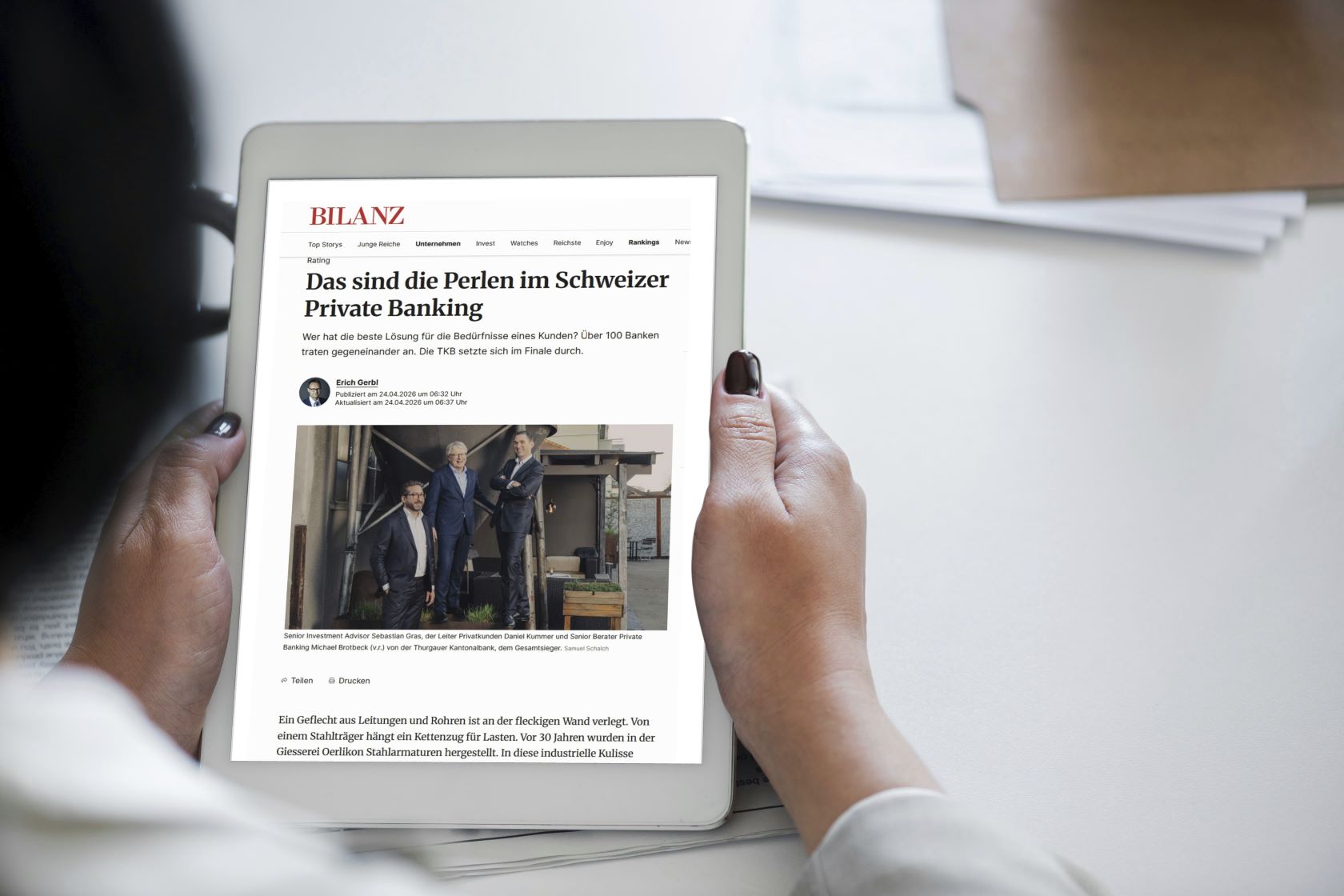
Who offers the best solution for a client’s needs?
The quality of a private bank is often difficult for external observers to assess. This makes a well-founded, objective evaluation process all the more important.
As part of the Private Banking Rating 2026 by the business magazine BILANZ, the following methodology was applied: mystery shopping combined with an expert evaluation by a jury led by Thorsten Hens, Professor of Financial Markets at the UZH Department of Finance.
Initial situation
"A married couple living in Thurgau, retired in 2025, withdrew CHF 3.5 million as a lump sum from their pension fund. They live debt-free in a renovated home. Due to the husband’s health condition, they are concerned about rising costs. Their goal is a worry-free retirement with an inflation-adjusted standard of living. They plan annual living expenses of CHF 80'000,- financed through state pension (AHV) and capital assets. The remaining wealth is intended to be passed on to their three children at a later stage. They are seeking an advisory mandate."
St. Galler Kantonalbank, Globalance, and Thurgauer Kantonalbank stood out in the preliminary round with particularly sophisticated proposals and were invited as finalists to the final round.
The jury evaluated the submitted proposals across four key categories:
- Investment strategy
- Cost structure
- Transparency
- Risk management
- Text/image component
Overall Winner 2026: Thurgauer Kantonalbank (TKB)
In the current rating, Thurgauer Kantonalbank (TKB) emerged as the overall winner. It applies a bucket (or “three-pool”) approach: the lowest-risk bucket, consisting of fixed-term deposits, secures liquidity for the first five years. From year six onward, a bond portfolio with a focus on Switzerland takes over. The third bucket targets long-term growth and invests in equities, real estate, gold, as well as alternative assets such as a hedge fund index and a long–short strategy.
“The 'buckets' are valuable in helping to ease clients’ fear of market fluctuations.”
— Prof. Thorsten Hens
Despite a conservative risk profile, TKB demonstrates a nuanced approach by slightly increasing the equity allocation to 30% (instead of 25%), while reducing the bond share. The portfolio is complemented by real estate, alternative investments, and liquidity. Overall, this results in a well-balanced proposal with an expected net return of 2.4% per year over a ten-year horizon.

Interview with Thorsten Hens
Professor Hens, the world has changed significantly since the last Bilanz Private Banking Rating 2025. How have these developments affected this year’s rating?
Yes, geopolitical risks have increased significantly compared to last year and are having a corresponding impact on investment strategies. As a result, many banks have, for example, once again begun to include gold more prominently in their recommendations as a strategic investment.
The study shows that investment in Swiss companies remains strong. What is your view on "bolder" investments in artificial intelligence and emerging markets?
That's correct; our study shows that most investment recommendations were on the conservative side. However, one of the reasons Globalance was named the best private bank is that it makes targeted global investments in future technologies.
What role does ESG currently play in private banking?
ESG has not played a central role this year. On the one hand, clients have shown little explicit interest in sustainable investments; on the other hand, there is currently a noticeable degree of caution or resistance on the part of the banks.
A recurring theme is fees and transparency. What is the current situation?
This year, the focus was primarily on competition for attractive terms and conditions, rather than on differentiation based on issues such as ESG or alternative investments. Customers were pleased, as they were able to significantly reduce the fees they were paying to their bank.
More information:
- Article in Handelszeitung (Paywall; in German):https://www.bilanz.ch/unternehmen/rating/private-banking-test-2026-tkb-setzt-sich-gegen-100-banken-durch/lmlks0j
- Bilanz Private Banking Rating 2025:
Study: Which bank is right for "Miss Moneypenny"?