Peking University (PKU)–Zurich Summer School 2026 brings machine learning and macro-finance research together
International PhD summer school co-organized by UZH researchers Prof. Yucheng Yang and Prof. Felix Kubler connects research, computational methods and international exchange
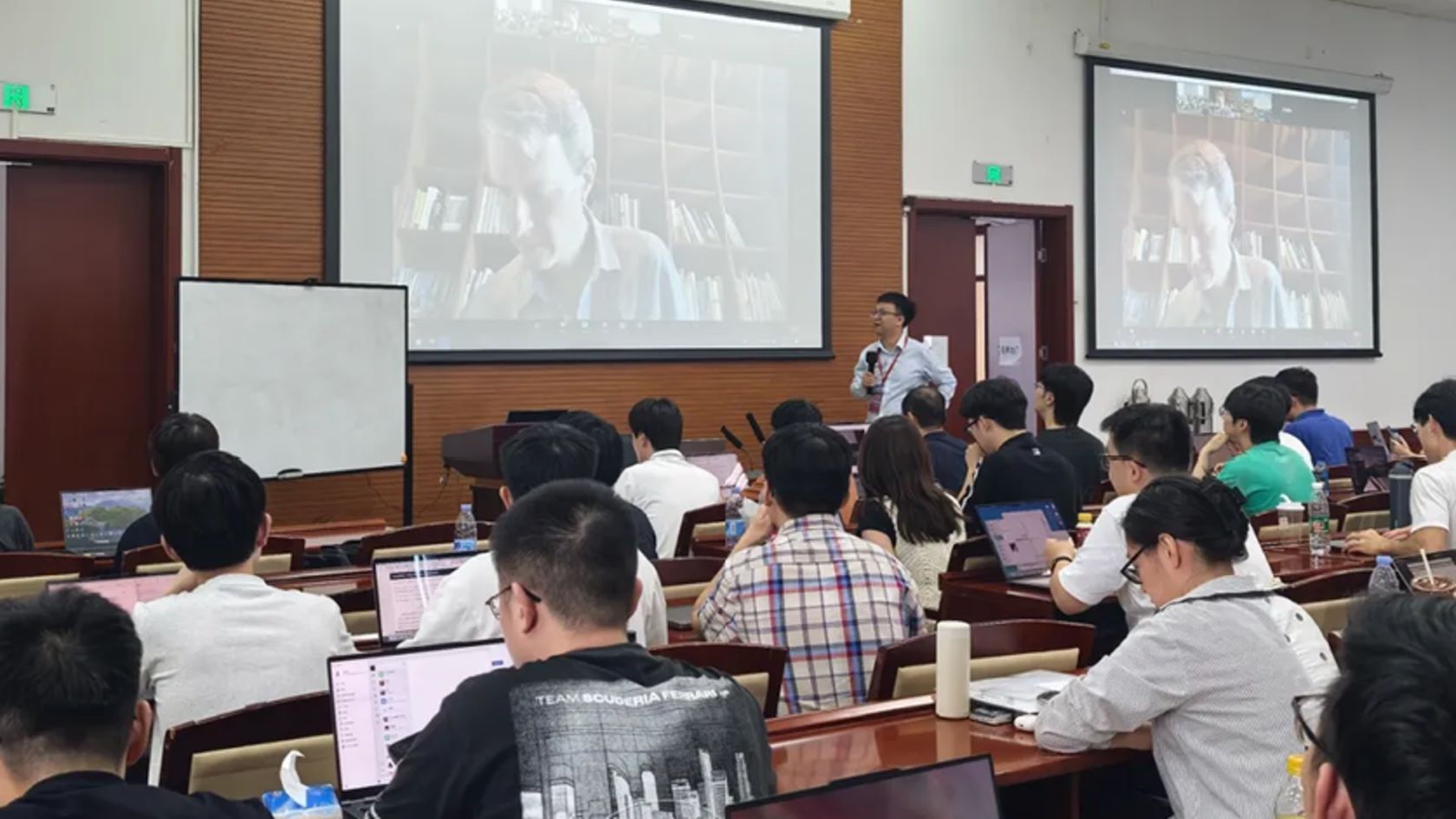
From 6 to 10 July 2026, Peking University (PKU) hosted the PKU–Zurich PhD Summer School on Machine Learning for Macroeconomics and Finance, bringing together researchers and PhD students from institutions around the world to explore the application of machine learning methods to macroeconomics and finance.
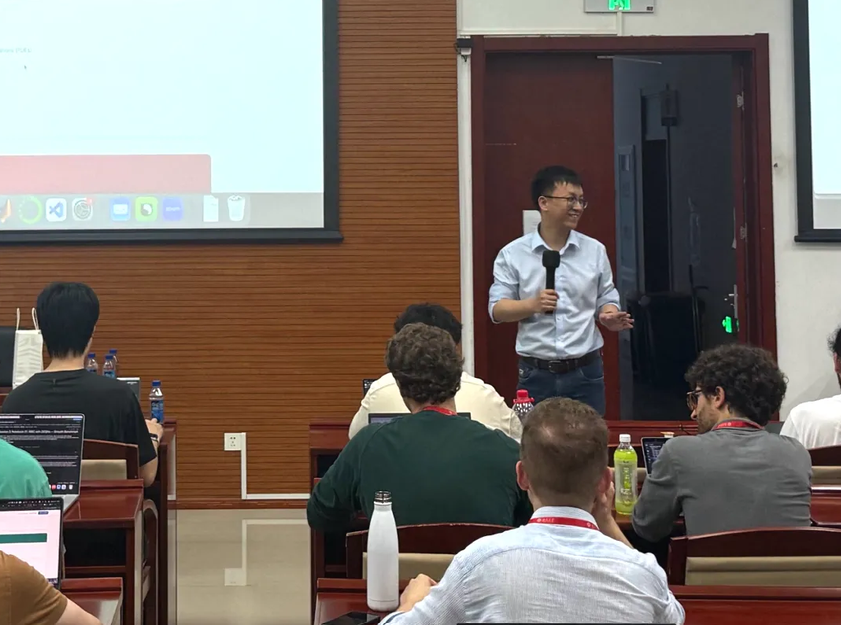
The summer school was co-organized by Prof. Yucheng Yang and Prof. Felix Kubler from the UZH Department of Finance and Prof. Bo Li from Peking University. More than 300 applications were received, with around 120 faculty members and PhD students selected to participate. The participants came from a broad range of international institutions, including Stanford University, the University of California, Berkeley, the University of Zurich, the University of Geneva, the University of Hong Kong, Peking University and Tsinghua University.
The program focused on the use of machine learning as a computational tool for economic research. Topics included deep learning, heterogeneous-agent models, reinforcement learning, continuous-time macro-finance, asset pricing and numerical methods for dynamic economic models. The program combined lectures with hands-on tutorials, taking participants from theoretical concepts to code and from economic models to numerical implementation.
From economic models to code
The five-day program featured contributions from researchers at institutions including Peking University, the University of Zurich, LSE, Princeton University, the University of Toronto, HEC Lausanne and Santa Clara University.
- Prof. Weinan E, Member of the Chinese Academy of Sciences and Chair Professor at Peking University, delivered a keynote on "AI for Science"
- Prof. Benjamin Moll, London School of Economics and Political Science (LSE), gave a special online lecture
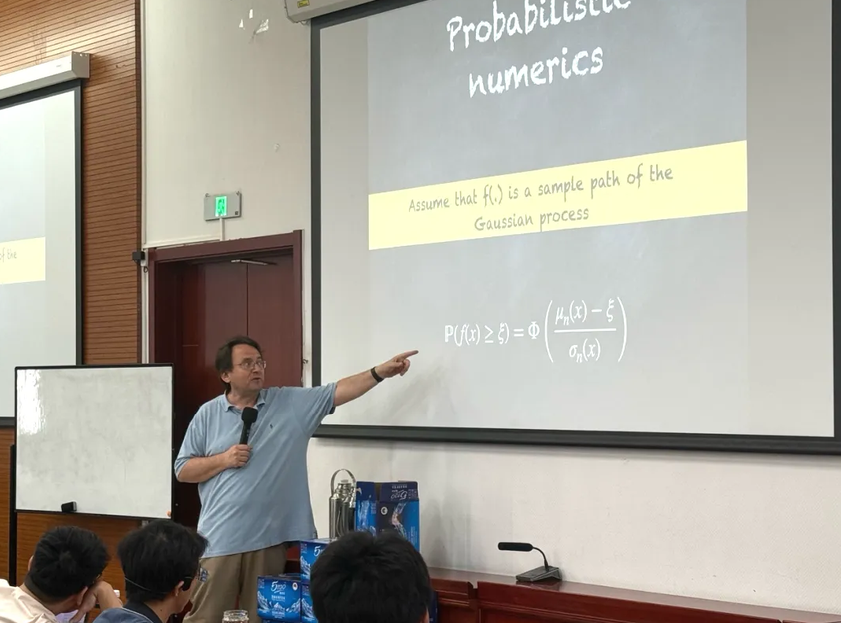
UZH researchers played a central role in the program. Prof. Felix Kubler presented work on probabilistic numerical methods and deep surrogate models, while Prof. Yucheng Yang introduced DeepHAM, a deep learning approach for solving heterogeneous-agent models. Participants also worked directly with code and computational tools, including DeepHAM (Deep learning-based algorithm for Heterogeneous Agent Models), structural reinforcement learning and JAX (a high-performance Python library for numerical computing and machine learning), linking the theoretical material to practical implementation.
Further sessions addressed structural reinforcement learning, deep learning for continuous-time macro-finance and methods for solving high-dimensional economic models. The program concluded with an interactive Q&A session in which participants discussed the models and methods presented during the week as well as challenges in interdisciplinary research.
A concrete outcome of an international research network: UZH Leading House Asia Pacific Funding Call 2025
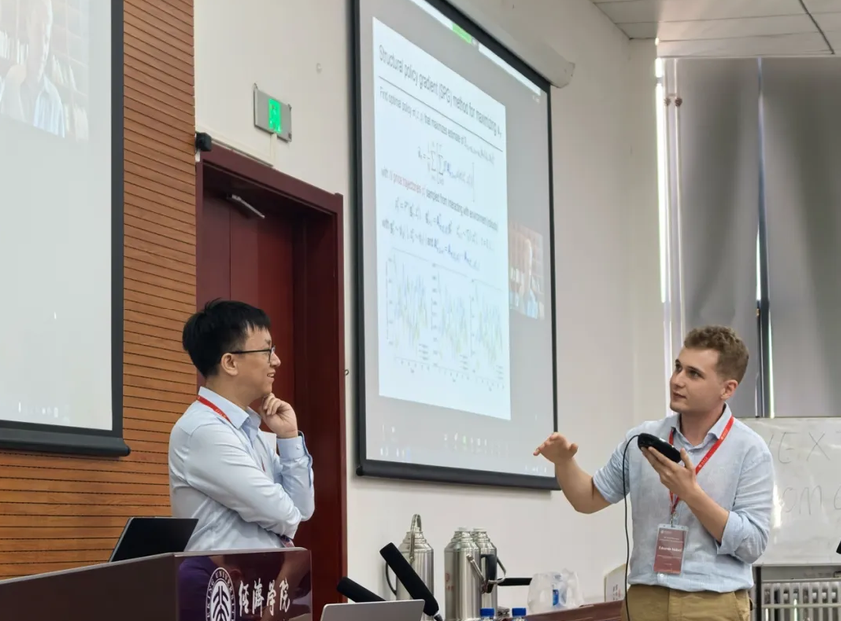
The summer school is one of the activities emerging from “Machine learning for better economic decisions”, an international research and training network led by Yucheng Yang and supported by a Research Network Grant from the UZH Leading House Asia Pacific Funding Call 2025.
This project connects UZH with research partners in the Asia-Pacific region, including Peking University, the University of Hong Kong and the National Graduate Institute for Policy Studies in Japan. It brings together expertise in economics, finance, computer science and policy to explore how machine learning methods can be combined with economic theory in ways that remain interpretable, reproducible and useful for decision-making.
The summer school materials, including slides, tutorials and code, have also been made openly available to the research community.
|
|
The UZH Leading House Asia Pacific supports research collaboration between Switzerland and partners across the Asia-Pacific region. The first funding call attracted more than 200 proposals, with 40 interdisciplinary projects selected for support, including 33 multilateral projects. For the PKU–Zurich summer school, the Research Network Grant provided by UZH’s Leading House Asia Pacific was complemented by sponsorship from Peking University, supporting the development of the international research and training activities. |
.2026-09-02-10-46-01.png)
More information:
|